Connect existing greenhouse sensors and controller data
Map the growing zones, documented equipment outputs and receiving platform before replacing working instruments.
Start with the equipment that is already installed
| Choice | What to compare | What to check |
|---|---|---|
| Climate sensors | Temperature, humidity or other documented outputs | Zone identity, unit, exposure and observation time |
| Root-zone or irrigation readings | Selected moisture, EC, level or flow signals | Installation position, calibration and signal interface |
| Controller and equipment status | Approved read-only registers or isolated contacts | Access permission, state meaning and change responsibility |
| Receiving platform | Data fields, credentials and supported interface | Account owner, exports, subscriptions and missing-data rules |
Example greenhouse point list
| Record | Example value | What stays with the reading |
|---|---|---|
| Zone and point | Greenhouse 1 / root-zone position A | Physical position and the selected probe configuration |
| Input definition | Documented register or analogue input | Address or channel, encoding, scale and unit from the instrument documents |
| Timing | Original measurement time and agreed update interval | Time zone, stale-value rule and supported outage recovery |
| Access | Approved monitoring account | System owner, permissions and handover contact |
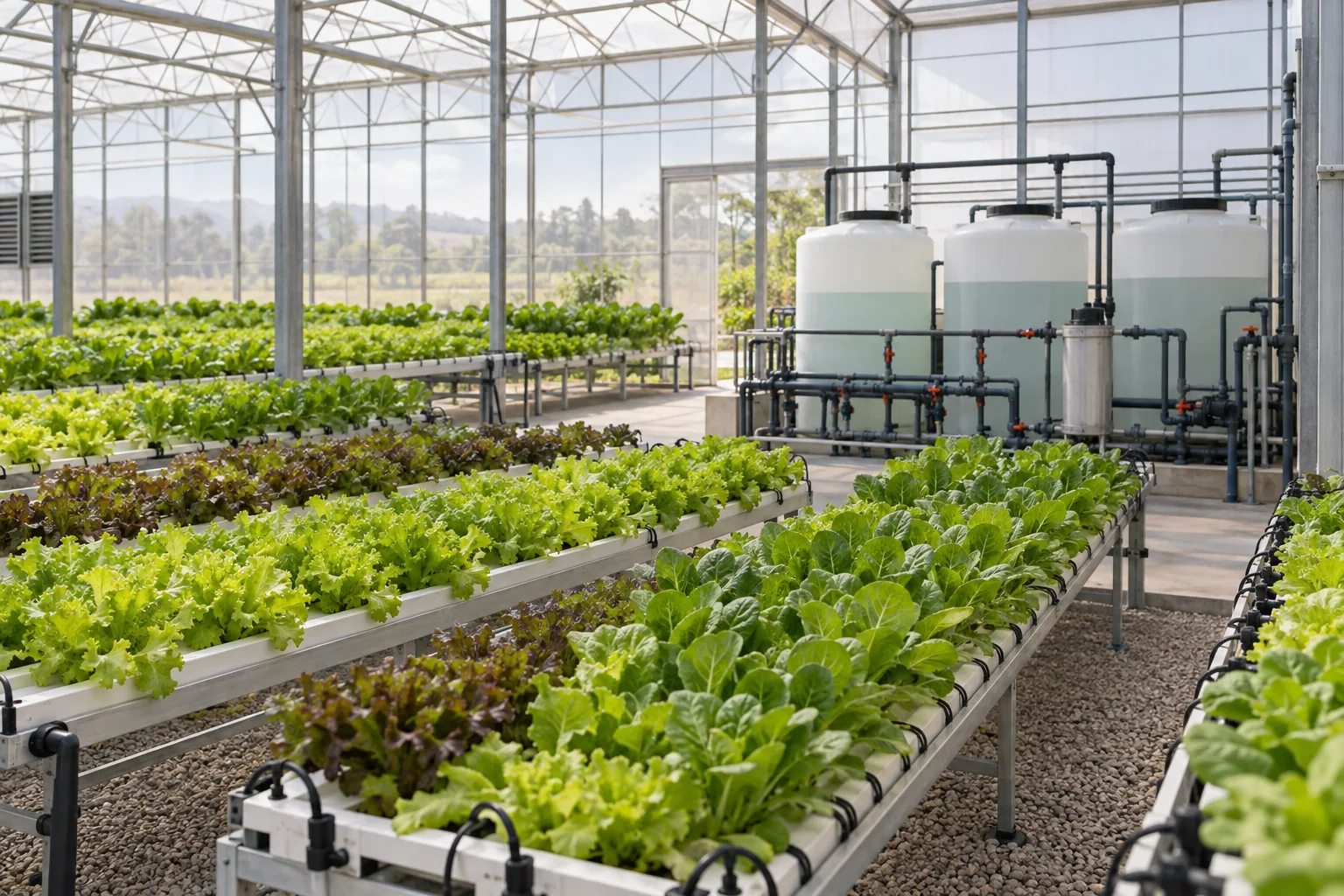
Useful for this connection
Keep a data handover usable
Agree identity, unit, timestamps, account ownership and replacement work.
Trace readings that are missing or wrong
Work through power, serial settings, register mapping and platform interpretation.
Facts that determine the design
- Which growing zones and existing sensors need to be connected?
- Who owns the controller, platform and network, and which read/write permissions are allowed?
- Which units, timestamps, sampling intervals and missing-data states must be preserved?
Equipment planning and a field trial
- A site/zone and signal map with the existing equipment identified.
- A proposed data path and interface list, with platform access and responsibilities recorded.
- A defined pilot, data-readback checks and maintenance handover agreed before installation.
Conditions to confirm
- A monitoring connection does not authorize remote control of irrigation, dosing or ventilation.
- Existing platform and network access must be available from the owner; licensed services are confirmed separately.
- Calibration and sensor placement remain part of the site-specific scope.
Equipment families to review
Field acquisition and networking
Selection and model-specific interfaces follow the agreed site requirements.
Greenhouse environments
Selection and model-specific interfaces follow the agreed site requirements.
Discuss agricultural facilities and data.
A work email helps, but is not required. Unknown quantity is fine. A cabinet, panel or site photo is the most useful attachment.
- How many tanks, pumps or cabinets.
- What you cannot see from the office today.
- Whether the cabinet already has power.
- Where the reading should arrive, if you know.
You can also email contact@sungeneiot.com. Same company as sungeneiot.com.
Common questions
Do we have to replace sensors that already work?
Not automatically. Review their documented output, supply, installation and data access. The connection proposal identifies what can remain and which additions or changes are needed.
Does a data connection allow remote irrigation control?
No. Reading measurements and issuing commands are different scopes. Confirm controller authority, permissions, protection and failure behaviour before any command integration.